

26 November 2026
The launch of the Australian Healthy Housing Handbook in Canberra today highlights the urgent need to address the relationship between housing quality, public health and economic prosperity.
For too long, Australia's housing debate has focused predominantly on affordability and supply, with insufficient attention given to the quality and performance of the homes we build and live in.
Research underpinning the handbook highlights the significant health and economic consequences of unhealthy housing:
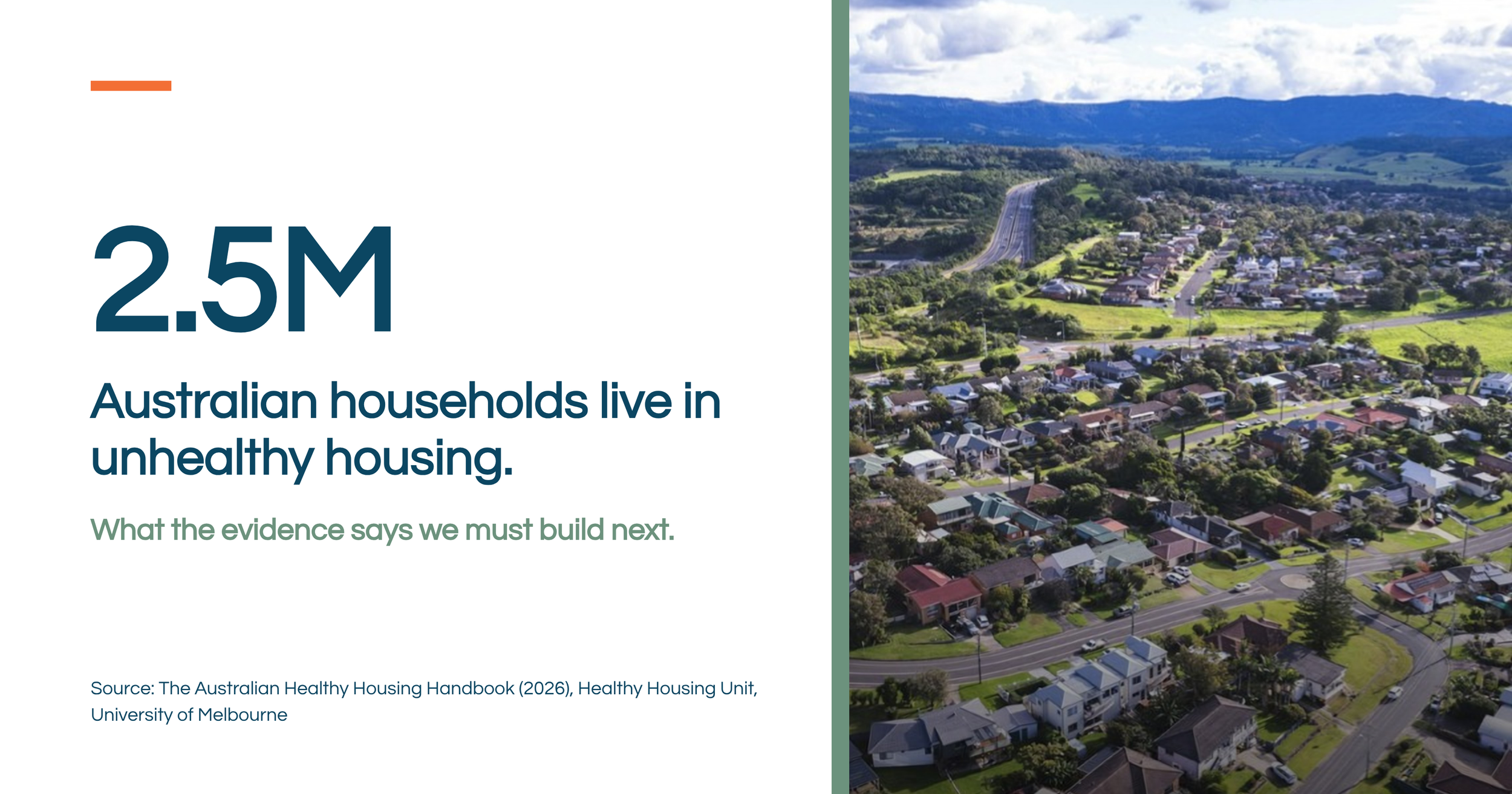
Approximately 2.5 million Australian households live in unhealthy housing.
Eliminating household mould could save $3.8 billion in healthcare expenditure over 20 years.
Addressing household mould could generate $5.9 billion in additional working-age incomes.
Cold homes, overheating, dampness, mould and poor indoor air quality are not simply issues of comfort. They can contribute to respiratory illnesses, cardiovascular conditions and poorer overall health, placing additional pressure on Australia's healthcare system.
The role of Passivhaus in delivering healthier homes
The findings reinforce the importance of addressing building performance as part of Australia's broader housing and public health agenda.
The Passivhaus standard provides a proven, internationally recognised and measurable approach to delivering healthier, more comfortable and energy-efficient buildings through:
Consistent indoor temperatures and year-round thermal comfort.
Continuous filtered fresh air through mechanical ventilation with heat recovery.
Reduced risk of condensation, dampness and mould.
Significantly lower heating and cooling demand.
Greater resilience to extreme temperatures and rising energy costs.
Quality assurance through independent certification and airtightness testing.
These benefits are particularly important for vulnerable Australians, including children, older people, renters and social housing tenants.
Moving from research to policy and action
The Australian Passivhaus Association (APA) welcomes this important research and encourages governments to translate the findings into meaningful policy action.
This includes recognising high-performance building standards within Australia's regulatory frameworks, prioritising healthier social and affordable housing, and improving the performance of existing homes through evidence-based retrofits.
As Australia works to increase housing supply, we must ensure that the homes we deliver today do not become the public health challenges of tomorrow.
Housing affordability should extend beyond the cost of purchasing or renting a home. It must also consider the ongoing costs of keeping that home comfortable, healthy and safe.
Investing in better buildings is investing in better health, lower household expenses, reduced healthcare expenditure and a stronger Australian economy.