

ONLINE COURSE
Certified Passivhaus Tradesperson Course
Practical online training for builders, trades and construction professionals who want to understand and deliver high-performance Passivhaus buildings.
Learn at your own pace, join live weekly Q&A sessions, and prepare for the CPHT exam.
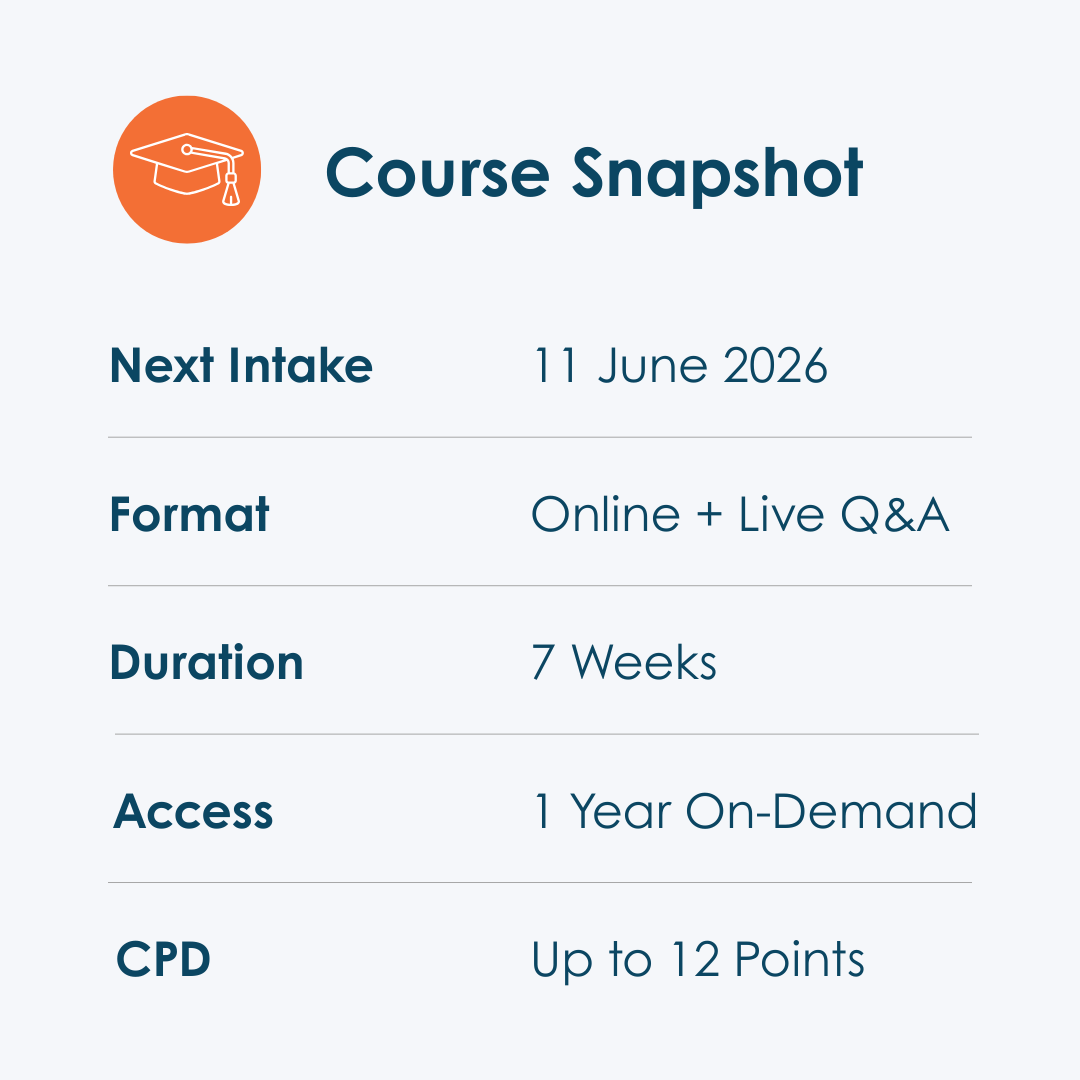

7 Live Q&A Sessions • Printed Slides Book • Taught by Local Australian Experts

Builders & Contractors
Build Your Passivhaus knowledge and deliver better outcomes for your projects and clients.
Who It’s For

Trades & Installers
Develop the skills to install high-performance systems with confidence.

Construction Professionals
Expand your expertise and lead high-performance projects from design to delivery.
Course Benefits
The Certified Tradesperson course prepares you to sit the Certified Passivhaus Tradesperson (CPHT) exam and equips you with the practical knowledge needed to deliver high-performance buildings.
By participating in this course, you will:
Develop practical Passivhaus skills - Gain the knowledge and hands-on understanding required to correctly implement the Passivhaus Standard on real client projects, helping buildings achieve Passivhaus certification.
Expand your professional opportunities - Earn the qualifications needed to work on Passivhaus and other high-performance building projects.
Future-proof your career - Building codes across Australia continue to become more stringent. The CPHT course equips you with advanced building science knowledge that goes well beyond minimum code requirements, helping you stay ahead of regulatory changes.
Position yourself in a growing industry - Demand for high-performance buildings and the Passivhaus Standard is increasing across Australia and globally, as clients become more aware of energy efficiency, comfort, and building performance.
Limit your liability and increase credibility - Learn current best practices and building science principles to improve build quality, minimise costly mistakes, and strengthen your reputation as a high-performance building professional.
Upon course completion, enjoy free membership to the Green Building Institute as well as a free listing on their Find a Green Tradie directory.
CURRICULUM
-
Review pioneer projects of the Passivhaus movement, and a number of built examples including different climate zones, building typologies and sizes.
Learn the definition of the Passivhaus building standard, and compare it to other concepts e.g. Passive Solar and Net Zero.
Appraise the cornerstones of the Passivhaus building thermal envelope, and how they affect health and comfort as well as energy efficiency.
Familiarise yourself with different players of the Passivhaus landscape, including research, training, quality assurance and certification.
-
Compare Passivhaus to the National Construction Code (NCC).
Learn to identify values for quality thermal envelopes in terms of energy, health, comfort, and indoor air quality.
Compare capital and operational savings for Passivhaus buildings.
Review key factors in the economics of high-performance building, including investment timeframe, energy market and thermal discomfort.
-
Identify key performance differences between thermal insulation and thermal mass, and how they impact different types of buildings.
Familiarise yourself with the thermal resistance and thermal transmittance of building assemblies, and compare the Passivhaus method with the NCC.
Compare typical U-values for Passivhaus buildings in different climate zones, and compare them with the NCC.
Review typical insulation materials, and their application depending on different construction methods.
-
Familiarise yourself with the definition of “thermal bridge”.
Learn about the consequences of thermal bridges on building energy performance and the risk of mould and condensation.
Review climate-specific metrics to verify the avoidance/mitigation of thermal bridges, and suitability for Passivhaus.
Identify typical thermal bridges for different construction methods, their risk level, and cost-effective ways to mitigate them.
-
Familiarise yourself with the comfort criterion Passivhaus requirement, and compare it to the hygiene criterion.
Compare the thermal performance of Passivhaus windows with NCC ones, and the consequences on thermal comfort and heating/cooling demand.
Identify subcomponents of windows and transparent components, and understand their implications for heat losses and solar gains.
Review different typical installation details for Passivhaus windows, and how detailing impacts performance.
-
Recap Passivhaus quality goals in the context of retrofitting existing buildings.
Understand the potential energy savings in building retrofits, and best practices to achieve the most cost-effective solutions.
Analyse risks associated with retrofitting different types of building structures, and ways to mitigate those risks.
Learn to apply the principles to a range of building typologies.
-
Familiarise yourself with different air and moisture transfer mechanisms, and their consequences in terms of energy efficiency and building damage.
Learn about PHI’s airtightness requirements, depending on different energy efficiency goals.
Review key factors of the blower door testing method, including Passivhaus-specific requirements.
Evaluate best practices for durable airtightness depending on different assemblies and construction methods.
-
Identify key metrics for indoor air quality and typical sources of air pollution inside buildings.
Learn about PHI’s requirements for mechanical ventilation systems, including energy consumption and heat recovery efficiency, air filtration, and noise control.
Evaluate common types of mechanical ventilation systems, including pros and cons depending on project application.
Review balancing and commissioning procedures for mechanical ventilation systems in Passivhaus building applications.
-
Familiarise yourself with key concepts of mechanical systems including heating, cooling and dehumidification, and domestic hot water.
Evaluate how the energy efficiency of Passivhaus buildings influences the suitability of specific systems and their operation.
Review innovative types of mechanical systems.
Learn about Primary Energy in relation to different energy vectors, and how that affects the energy offsetting process to meet Net Zero.
-
Review of construction photos.
Identify lacking or poorly executed details regarding Passivhaus construction in terms of airtightness and thermal insulation.
Provide brief instructions on how to solve these quality assurance issues.
-
The exam is based on the following learning targets and includes multiple choice questions, building site pictures, as well as small calculation and drawing exercises.
Once accredited, your certificate will be valid for 5 years and is internationally and nationally recognised.
2025-26 Course Dates & Delivery
Delivered online over 7 weeks with live Q&A sessions held on Thursdays from 4:00pm - 5:00 pm AEST
-
Online sessions with live Q&A held on Thursdays from 4:00pm-5:00pm AEST (Sydney time).
April 23, 2026 → June 4, 2026
Early bird pricing ends: April 9, 2026
-
Online sessions with live Q&A held on Thursdays from 4:00pm-5:00pm AEST (Sydney time).
June 11, 2026 → July 23, 2026
Early bird pricing ends: May 28, 2026
-
Online sessions with live Q&A held on Thursdays from 4:00pm-5:00pm AEST (Sydney time).
13 August - 24 September 2026
Early bird pricing ends: July 30, 2026
-
This is the last course of 2026!
Online sessions with live Q&A held on Thursdays from 4:00pm-5:00pm AEST (Sydney time).
22 October → 3 December, 2026
Early bird pricing ends: October 8, 2026
APA Members save over 10% on this course.
Exam is purchased separately.
Member
Early Bird Price: $1,950
Full Price: $2,380Exam: $712.50
Non-Member
Early Bird Price: $2,250
Full Price: $2,680Exam: $750
*10% GST added at check out for all listed pricing
Payment Plans for Certified Courses
You can secure your place and split the cost into 4, 6 or 8 payments.
Full payment must be received prior to attending the course.
In the event that the course fills positions will be reallocated when a payment schedule has fallen behind and has missed payments. In the event that this happens, your spot will be reallocated to the next available date.
Contact our team at admin@passivhausassociation.au to arrange your payment plan.
In-House Tradesperson Training and Group Pricing Options
Many of our clients talk about the significant benefits of knowledge transfer with group training, as participants have a cohort to cross-reference lessons learnt and content by following the training during their practical application at work. Our pricing is structured so that the more you have on board, the more you’ll save.
Course FAQs
-
Yes, a company may be able to register their staff to attend this program. Discounts are available you have a company membership, for any staff listed in the membership's sub-profile, including discounts on courses and events. Once the staff member's sub-profile is activated, they can register for the course or event through their profile.
-
Yes. All sessions are recorded so that you can go back and review any challenging material. This also ensures that you’re still able to participate in the course in the case of availability emergencies. Recordings are available for 12 months on your education dashboard.
-
The course itself runs for 7 weeks. However, you will need to set aside additional time for exam preparation and writing the exam.
-
Yes. Before course commencement, you will be registered to the education dashboard where you'll have access to the online course content and slides. You will receive a slides book in the first week of the course.
-
Yes. Besides the live Q&A sessions on Thursdays, you will also have 12 months of access to an online discussion board, where you can ask any course-related questions.
-
At times, our department is required to combine courses or slightly shift dates due to unforeseen circumstances.
If this happens you will be added to the next course dates. For more detail on this please read our terms and conditions.
Attend our Practical Training Workshops
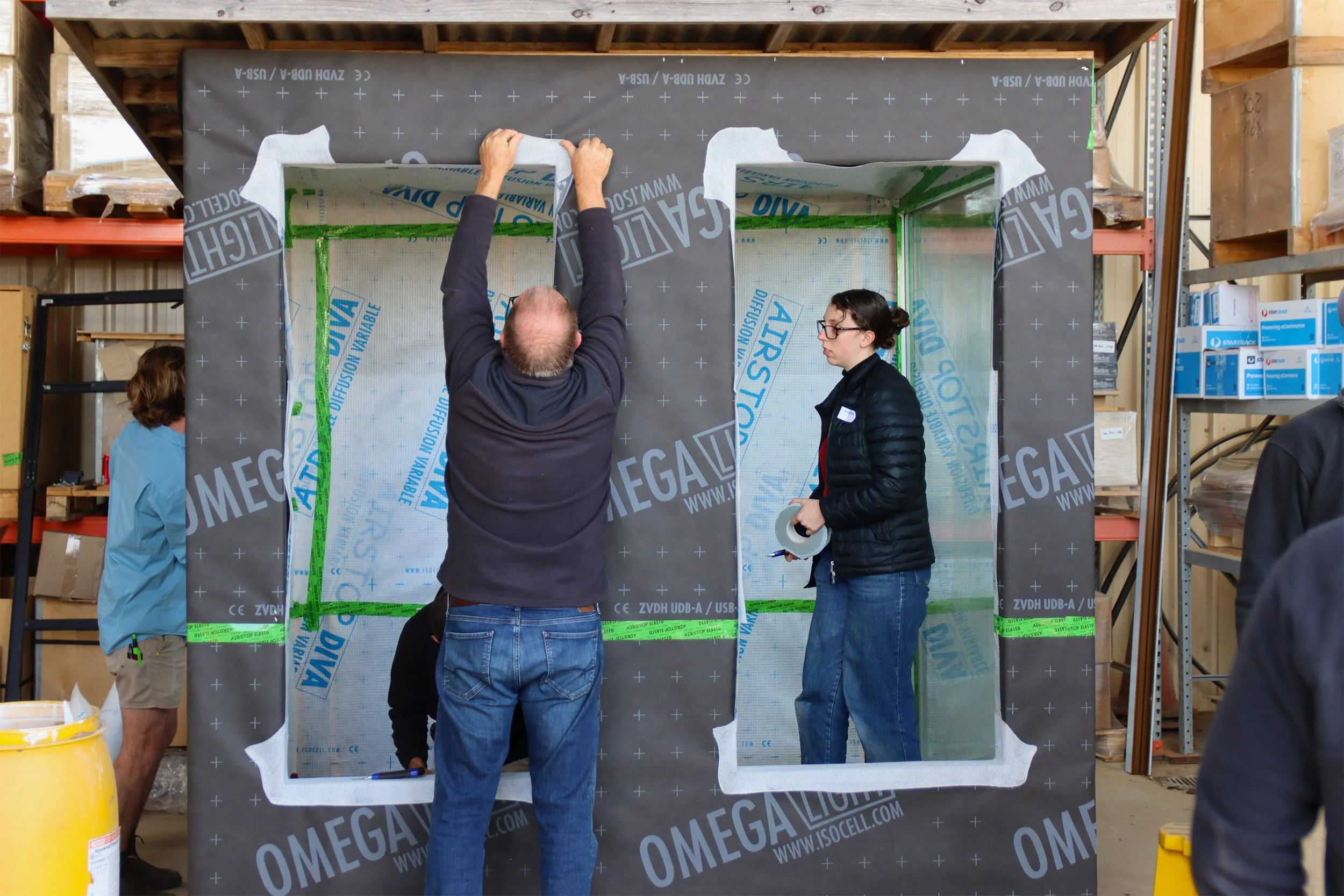
Complement your CPHT course with hands-on experience. Our one-day Practical Training Workshop lets you apply your building science knowledge directly—working with leading suppliers on essential installation techniques including windows, MVHR systems, blower door testing, and pod wrapping.
Many successful graduates combine both programs to build complete confidence in delivering certified Passivhaus projects. Not included in the course.
Upcoming dates: 21 Nov (Melbourne) | 28 Nov (Sydney)

Our Educators



-
Scott runs a Passivhaus and Building Science consulting business, LAB Design, with his wife Madonna from the mid-north Coast of NSW. A Certified Passivhaus Designer and thermal modelling expert since 2014, he has contributed to a vast array of Passivhaus projects both in Australia and overseas, including his own, and has a passion for simplifying details for buildability and cost. Scott’s varied career experience prior to becoming a CPHD includes aeronautical engineering, building design, teaching and a 20-year Air Force aviation career, all contributing to his ability to problem solve with innovative and practical solutions.
-
Madonna began her career in the family construction company prior to enjoying a 12-year Air Force Aviation career. In addition to working on her own construction projects, Madonna contributes to the Passivhaus community through her work in the growing field of hygrothermal risk assessment (moisture management). In addition to studying science, she has completed an international study on hygrothermal risk assessment and is a WUFI professional.
-
Canberra-born and raised, Alex Slater understands the necessity of a well-insulated home. Sometimes the weather can knock your socks off through frostbite! A registered architect and certified passive house designer, now living in Melbourne, Victoria, Alex walks with both the architectural and building physics worlds, together.
His typical approach is to de-label and re-assess the requirements of a building envelope based on a project’s priorities. This approach has been used effectively to work with standards and conversations about building physics in Australia and Alex is on a mission to confirm that good buildings are not rocket science, they just require some upfront thinking.
Hear from past participants
Who relies on our training


